



Robin Roberts Headlines the Melanoma Research Foundation’s 25th Annual New York Gala
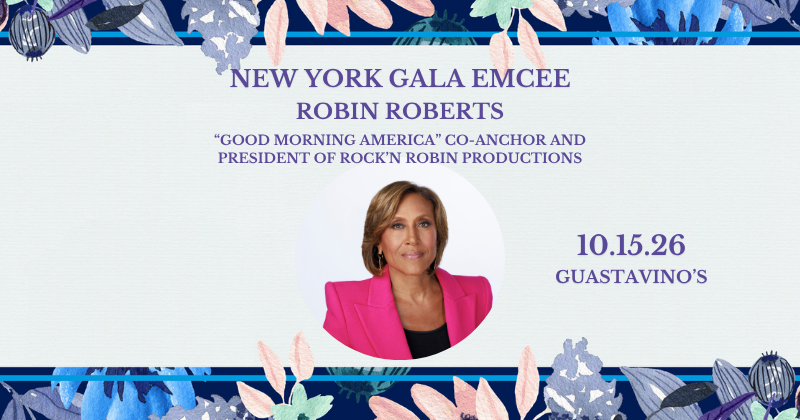
“Good Morning America” Co-Anchor and President of Rock’n Robin Productions to Emcee Milestone Event Celebrating 25 Years of the NYC Gala and 30 Years of the MRF
New York City, NY (October 5, 2026) – The Melanoma Research Foundation (MRF) will host its 25th Annual New York Gala on Thursday, October 15, at Guastavino’s, marking a milestone celebration of the Gala’s 25-year history and the MRF’s 30 years of advancing melanoma research, education and advocacy. The inspirational evening will bring together members of the melanoma community, philanthropists, researchers, advocates and supporters to honor those making an impact and raise critical funds to accelerate treatment innovation and progress toward a cure for a disease that affects more than 1.4 million Americans.
The milestone Gala is honored to welcome Robin Roberts, Co-Anchor of “Good Morning America” and President of Rock’n Robin Productions, as this year’s emcee.
With a goal of raising $1.3 million, Gala attendees, donors and sponsors will foster a legacy of hope and progress for the melanoma community. Funds raised through the event will support the MRF’s mission, including elevating prevention and awareness of melanoma, supporting all melanoma patients through educational programs, funding innovative research grants that lead to more therapeutics and novel clinical trials and advancing federal and state-level advocacy initiatives.
“For three decades, the MRF has been a committed and impactful thought leader in melanoma patient advocacy,” said Kyleigh LiPira, CEO of the Melanoma Research Foundation. “As we celebrate the 25th anniversary of our New York Gala, we are reminded of what is possible when our community comes together with a shared commitment to enabling life-saving research, education, advocacy and hope. This milestone evening is an opportunity to celebrate how far we’ve come while investing in the discoveries and breakthroughs that will ultimately benefit melanoma patients and their loved ones.”
Throughout the event, the MRF will present and honor Miguel A. Materin, MD with the CURE OM Vision of Hope Award for his commitment to fighting melanoma through exemplary patient care, cutting edge research and scientific leadership and Elta MD will be presented with the Corporate Leadership Award for their longstanding commitment to sun safety and skin health. Three courage awards will be presented to individuals whose courageous stories inspire the melanoma community including Jason Chambers, Sara Corrado and Lindsay Held. Whitney Bowe, MD, FAAD will receive the Excellence in Prevention Award for her unparalleled dedication to the prevention of melanoma, and the compassion with which she treats their patients.
Gala attendees will celebrate the melanoma community through a seated dinner, once-in-a-lifetime auction items and experiences, special presentations and an exciting Fund-a-Grant that will help enable the next groundbreaking treatment.
The MRF thanks its event co-chairs including Terry and Doug Brodman, Elyse Love, MD, FAAD and Anthony and Carly Manginelli, its auction and volunteer co-chairs and host committee. Their leadership and commitment have played an integral role in bringing the 25th Annual New York Gala to life.
To purchase a ticket, sponsorship or to make a donation, click here.
About the Melanoma Research Foundation (MRF)
The Melanoma Research Foundation (MRF) is the largest independent organization devoted to melanoma. Committed to the support of medical research in finding effective treatments and eventually a cure for melanoma, the MRF also educates patients and physicians about prevention, diagnosis, and the treatment of melanoma and the melanoma rare subtypes. The MRF is a committed advocate for the melanoma community, helping to raise awareness of this disease and the need for a cure. The MRF’s website (www.melanoma.org) is the premier source for melanoma information seekers. Find the MRF on Facebook, Twitter, Instagram and TikTok.
Media Contact
James Merrick
Chief Communications and Marketing Officer