



Non-invasive Assessment of Response to Neoadjuvant Therapy in cN+ Melanoma
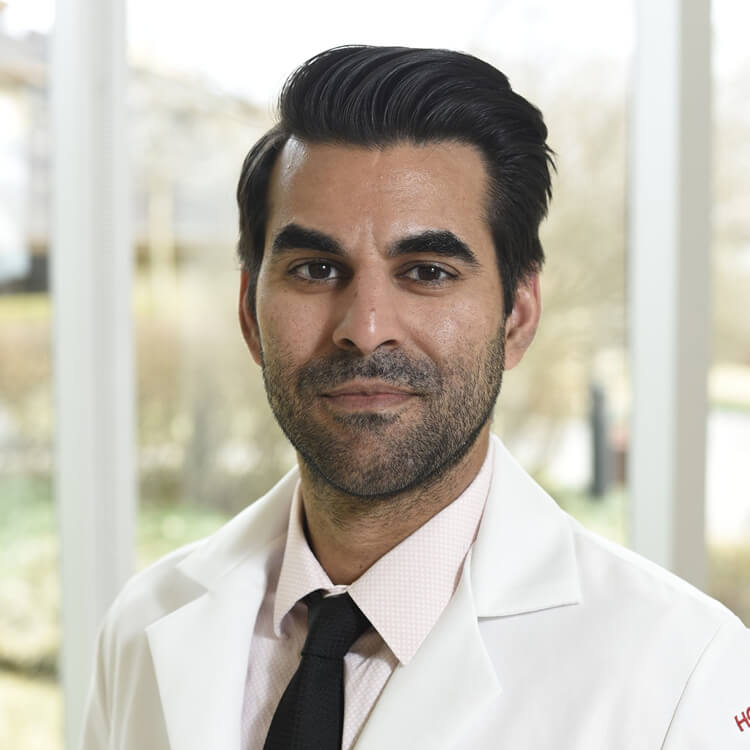
Praveen Chatani, MD
Jeffrey Farma, MD, FACS
Resident/Fellow Award
The Research Institute of Fox Chase Cancer Center
Gracie's Grant
Praveen Chatani’s Abstract
Why This Research Matters
Recent advances in melanoma treatment use drugs called checkpoint inhibitors before surgery to help the immune system attack cancer. This approach, known as neoadjuvant therapy, works better than surgery followed by treatment afterward. About 60% of patients have an excellent response, meaning little to no cancer remains. Currently, doctors must surgically remove lymph nodes to determine how well treatment worked, which can lead to complications such as fluid buildup, infection, and nerve injury. If treatment response could be assessed without major surgery, many patients could avoid these risks.
What We Are Studying
This study will test less invasive ways to measure treatment response. A core needle biopsy uses a small needle to collect tiny tissue samples and is a minor procedure. We will compare biopsy results to full lymph node analysis, the current standard. We will also evaluate whether imaging scans and blood tests can help predict response.
How the Study Works
Patients with melanoma involving lymph nodes will receive standard checkpoint inhibitor therapy for six weeks, followed by planned surgery to remove the lymph nodes. Before the lymph node is sent to the pathology lab, small tissue samples will be collected using a needle. Pathologists will assess both the needle samples and the entire lymph node to measure remaining cancer. Blood samples and imaging scans will be collected before and after treatment to determine whether response can be predicted without tissue sampling.
Expected Impact
If needle biopsies are accurate, many patients could avoid extensive lymph node surgery. Patients who respond well may skip additional surgery or treatment, reducing complications and improving quality of life, while non-responders could transition quickly to more intensive therapies. This study will provide key data to support larger trials that could make melanoma care safer and more personalized.