



Reprogramming Tumor Macrophages to Relieve T-Cell Inhibition in Melanoma
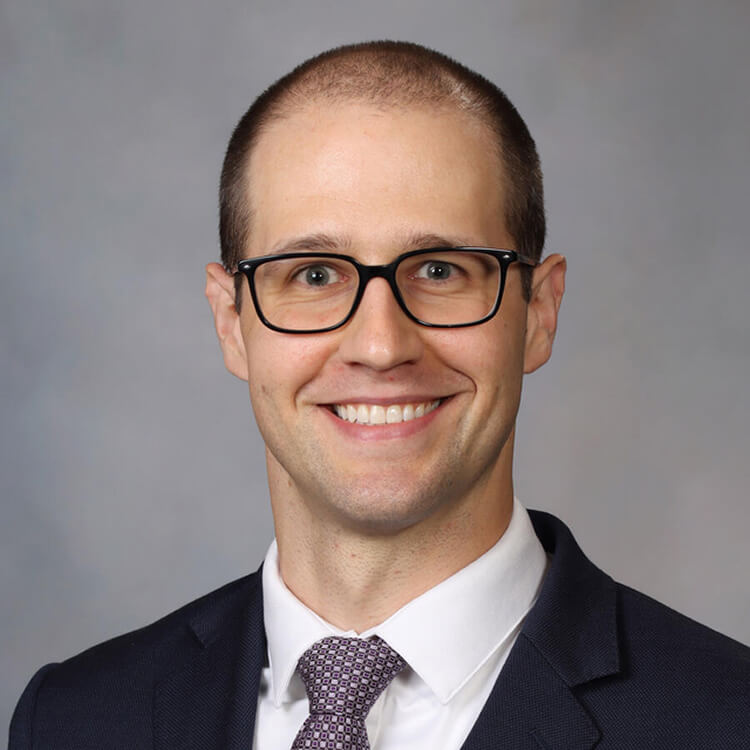
Mathew Schnorenberg, MD, PhD
Svetomir Markovic, MD
Resident/Fellow Award
Mayo Clinic College of Medicine and Science
Funded by the Ocular Melanoma Foundation (OMF)
Mathew Schnorenberg’s Abstract
Melanoma and other tumors recruit immune cells called macrophages. Instead of helping fight cancer, many macrophages are trained by the tumor to protect it. These tumor-associated macrophages (TAM) form a shield that blocks killer T cells and limits the benefit of immunotherapy. Our goal is to reprogram TAM so they stop protecting the tumor and start helping the immune system attack it.
We take inspiration from pregnancy biology. During pregnancy, small fragments of fetal DNA can trigger a built-in “DNA alarm” in immune cells (the cGAS-STING pathway), switching on signals that alert and activate the immune system. We believe that turning on this same alarm inside TAM could break down the tumor’s protective environment and restore anti-tumor immunity. To do this safely and precisely, we built tiny nanoparticles that package synthetic DNA mimics and deliver them mainly into macrophages, so the alarm is activated where it can help rather than throughout the body.
In early tests with human immune cells, our nanoparticles activated this DNA alarm at doses below those that caused cell damage, defining a safety window. Next, we will (1) measure how macrophages change after treatment and (2) test whether treated macrophages stop suppressing T cells and instead boost T-cell activation and melanoma cell killing. If successful, this work will point to a new way to make immunotherapy more effective by targeting a major source of immune suppression in melanoma.